- Bloomsrarely
- Fruitsrarely
- Growing in the dex!
- CwaDry-winter humid subtropical
- CfaHumid subtropical
- AfTropical rainforest
- AwTropical savanna, dry winter
- AmTropical monsoon
- CwbDry-winter subtropical highland
Native to the monsoon forests of tropical Asia, Alocasia is extremely prized among indoor growers for its magnificent leaves which look like glossy arrowhead “shields”. Ranging from green to near-black, each new shield typically opens larger than the last. Given room, a single leaf can outgrow a dinner plate which gives this plant the popular nickname “Elephant Ear”. It lives in two speeds. When warm and humid, it pushes a new leaf every few weeks and quietly multiplies underground from a corm. In cool or dark habitats, it drops leaves and may retreat to a bare root-mass, only to return in spring. It typically prefers bright indirect light, evenly moist chunky soil, and particularly detests cold drafts.
Ideal habitat
tolerates 10–85 % · happiest 18–69 % · Monsoon swamp margin profile
tolerates 10–175 klx·h a day · happiest 45–95 klx·h a day · Monsoon swamp margin profile
tolerates 55–91 °F · happiest 64–79 °F · Monsoon swamp margin profile
tolerates 45–90 % · happiest near 73 % · Monsoon swamp margin profile
shaded band = tolerated range · dotted line = happiest — the same targets an Autopod steers by.
Year by year
Getting started
usually arrives as an established pot or a bagged corm — a nursery plant starts partway up the size ladder, not at the bottom
Typical timeline
Quiet stretch — winter retreat · water far less, never cold.
Care milestones
Botanical drawing
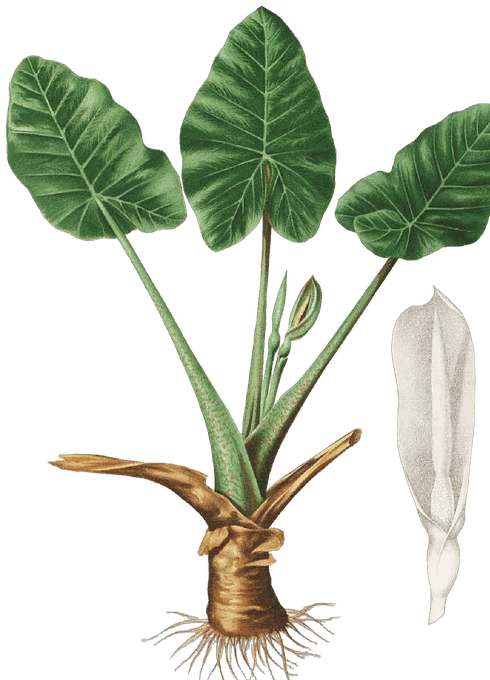
Flora de Filipinas, Gran edición, pl. 177 (Blanco, 1880–83) — as 'Arum grandifolium' / 'Alocasia montana?'
See one growing
Real plants in real jungles, on live sensors.
Page history
- rev 2currentAdd written overviewAdi · 2026-08-24
- rev 1replacedseed bake from the curated registrythe dex · 2026-08-15
Everything on this page is available under CC BY-SA 4.0.